

Can I be a good ally?
What does it mean to be an “ally”?
When you advocate for the end of discrimination alongside a marginalised group, people may consider you an ally. Being an ally is an active process that requires people to stand up against injustice targeted at disadvantaged or underrepresented people.
Anyone can be an ally. Allyship works best when there is strength in numbers. Our University community must commit to achieving meaningful and lasting change if we are to create a more inclusive environment.
Take a moment to think about the following question in relation to the above information:
If not you, then who?
What steps can I take to be an ally to trans people?
There are several ways you can be an ally to your trans colleagues and peers. Please select the → arrow on the bottom-right of the box below to look at some examples.
Respect people’s gender identity and expression.
Do not tell people about another person’s gender identity or deadname unless given permission by that person to share. This is because you can’t be sure that this won’t ‘out’ the person and put them in danger. Keep documents with a person’s previous name or gender confidential, as this is a legal requirement.
Refer to people in line with how they want other people to address them. Use the name, and pronouns, people ask you to. Do not ask what people’s deadname is, and do not use it. Doing so is rude and disrespectful.
Encourage people to share pronouns in meetings if they feel comfortable to. You can do this when chairing meetings or recruitment panels. For example, consider starting the meeting by saying: “Let’s go around the room. Could everyone please say their name, their role, and their pronouns if they feel comfortable to”.
Offer up your pronouns if you feel comfortable to! This will help others to do the same. For example, “My name is Joe Bloggs, my pronouns are he/him, and I work in the Faculty of Medicine and Health”.
Be an ally in all environments, not only the spaces where you think you should. If you feel comfortable doing so, you can share your pronouns with external partners or third party individuals. This will show our University’s equality, diversity, and inclusion values.
Include your pronouns alongside your name where possible (but only if you feel comfortable to do so). You can do this in your email signature, on name badges, meeting minutes, team structure charts, and lists.
Use gender-neutral language. We shouldn’t gender things unnecessarily. For instance, you can use the term “Police Officer” instead of using “Policeman”.
Until you know someone’s pronouns, you can use their name to refer to them. You can also use they/them/their pronouns, but remember that if a person requests you to use certain pronouns, you should do this.
Show your support. There are many ways to demonstrate solidarity, such as wearing a rainbow lanyard, placing a rainbow flag in your office, etc. You can also use a pronouns pin badge, which can be a way to share your pronouns.
What happens if I ‘get it wrong’?
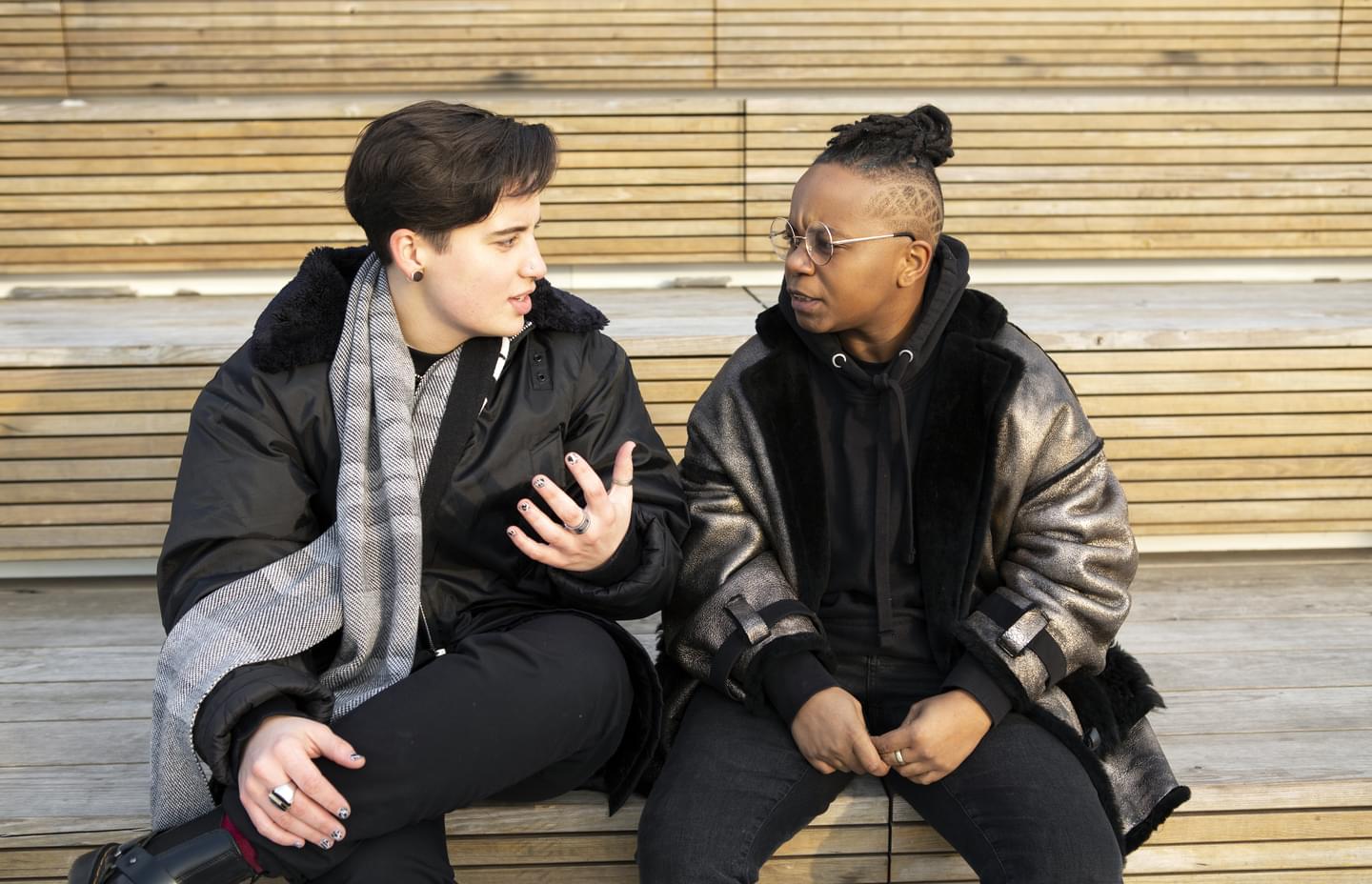
Allyship is a continual and active learning process, so there may be times when we get it wrong. When missteps do happen, it is important we are open to listening, learning, and changing our behaviour. This is so we do not make the same misstep again. We must respond with respect, dignity, and kindness.
One example could be when you use the wrong pronouns to refer to somebody when you first meet them. If you do use the wrong pronouns, make sure to listen to how the person wants others to refer to them, apologise, correct yourself, and move on. Make sure to use the correct pronouns next time. This is because people will perceive repeated misgendering as harmful, even if this was not the intention.
On the other hand, when other people make missteps, we may want to encourage them to change their behaviour. To do so, we need to understand the difference between ‘calling people out’, and ‘calling people in’. If you call someone out, you let them know their comment was hurtful in a public space where others can hear. If you call someone in, you speak with them in private about why their comment was hurtful to yourself or others. Both approaches may work in different scenarios and there may be many variables that influence which approach to take. What is most important is to ask the person(s) affected how best you can help, if at all. Also, if you are raising the misstep with someone, it is important to focus on the behaviour, rather than the person.
One of the biggest obstacles in advancing equality is apprehension. Many variables can cause this, but mainly, it is the fear of making a mistake or appearing ignorant that causes the anxiety. We all need to confront this fear and lean into our vulnerability to further our learning.
To facilitate the above, people need the space to develop their knowledge in psychologically safe conditions. We need to encourage everyone to share their experience. By having a collective understanding we can empower curiosity through self-learning.
Explore the allyship:

Allyship is a continuous process.

There may be moments when we get allyship wrong…

…but when we get it right, we will make a difference.

It is important as an ally to uplift others…

… and to be aware of the challenges they face.

This way we can achieve meaningful and lasting change.
Please select the “Menu” button at the top left-hand side of the page to return to the main menu. Alternatively, you can use the arrow at the bottom of the page to move to the next section.